
 Позвоните

 Отправьте запрос
 Messenger
 WhatsApp

📺 Polina Stoykova MRICS on Euronews Bulgaria: The Property Market Enters a New Phase After the Euro Adoption
 What is happening in Bulgaria's property market after the record-breaking year of 2025? Are transaction volumes declining? Will prices start to fall? And is there any reason to fear a property market bubble? These were among the key topics discussed by Polina Stoykova MRICS, Managind Director of BULGARIAN PROPERTIES, and journalist Diana Radeva on the Euronews Bulgaria programme Good Morning, Europe.
According to Polina Stoykova, the current market development is a natural progression. After more than two years of exceptionally strong activity, fuelled in part by expectations surrounding Bulgaria's adoption of the euro, the market is gradually entering a new stage. The initial wave of buying enthusiasm has now subsided, giving way to a calmer and more balanced market environment.
Second-quarter data shows that the number of residential transactions in Sofia has declined by around 17%, while nationwide volumes are down by 15–20% compared to the same period last year. However, Polina Stoykova emphasised that these figures should be viewed in the context of the exceptionally strong market seen in 2025, when many buyers brought forward their purchasing decisions ahead of the euro adoption. Rather than signalling a market downturn, the current slowdown represents a return to more sustainable levels of activity. Similar periods of reduced transaction volumes have also been observed during the high-inflation period of 2022–2023 and at the beginning of the COVID-19 pandemic.
One of the key messages from the interview was that a decline in transaction numbers does not automatically lead to falling property prices. On the contrary, BULGARIAN PROPERTIES' latest data shows that average prices in Sofia remained virtually unchanged in the second quarter compared to the first. This indicates that price growth is slowing rather than reversing. The average residential price in the capital has stabilised at around Ђ2,700 per sq.m, a level that appears to be becoming a psychological threshold above which buyers are increasingly cautious.
The trend is also evident across Bulgaria's other major cities. Average residential prices have reached approximately Ђ2,000 per sq.m in Varna, Ђ1,800 per sq.m in Burgas, and Ђ1,700 per sq.m in Plovdiv. This demonstrates that elevated price levels are no longer confined to Sofia but are increasingly characteristic of the country's leading regional markets.

Polina Stoykova also pointed out that although price growth is moderating, there are currently no strong indicators suggesting a significant market correction. Construction costs continue to rise, placing upward pressure on the prices of newly built homes and, consequently, on the wider residential market. The expectation is that property prices will continue to increase, albeit at a much more moderate pace – around 0–5% per quarter, compared with the double-digit growth recorded in recent years.
Within Sofia, the highest property values continue to be found in the city centre and the southern districts. Among the fastest-growing neighbourhoods are Lozenets, Krastova Vada, Malinova Dolina and Manastirski Livadi-East, where numerous residential developments are currently under construction. At the same time, transactions continue to take place across all parts of the Bulgarian capital, including its outer districts, indicating that buyer demand remains broad-based rather than concentrated in a handful of premium locations.
Another clear trend highlighted during the discussion is the growing demand for three-bedroom apartments, which now account for the largest share of completed transactions. This reflects a shift towards more long-term purchasing decisions, with buyers placing greater emphasis on space, functionality and quality of living.

Больше Новостей

Болгария готовится к одному из крупнейших международных событий последних лет. Бургас официально выбран городом-хозяином конкурса песни «Евровидение 2027», и впервые крупнейшее музыкальное шоу Европы пройдёт на болгарском побережье Чёрного моря.
71-й конкурс песни «Евровидение» состоится в Arena Burgas. Два полуфинала запланированы на 11 и 13 мая 2027 года, а финал про...

В конце 2025 года инвестор AMur совместно с BULGARIAN PROPERTIES дал старт строительству SKY TOWERS by AMur — амбициозного жилого комплекса в южной части Софии.
В течение следующих четырёх лет в районе Манастирски ливади – Восток, на развязке Окружной дороги и квартала Бояна, появятся две башни высотой 75 метров. По словам инвестора Уалида Гарби, они задуманы как будущ...
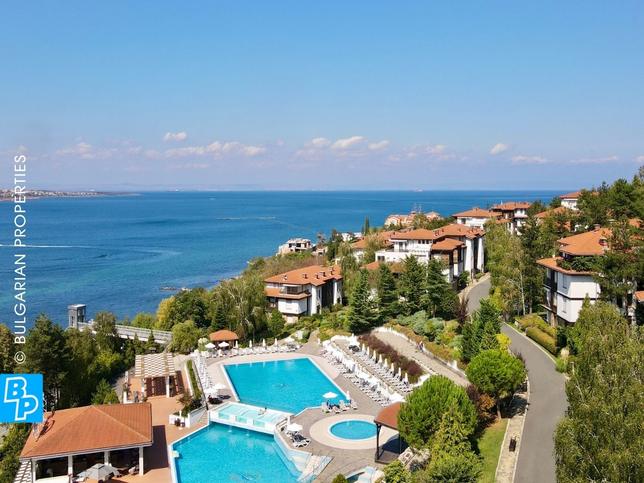
Курортный комплекс в Созополе предлагает развитую инфраструктуру и разнообразие возможностей для отдыха и развлечений.
В 2025 году курортный комплекс «Санта Марина» в Созополе отмечает свой 20-й сезон — важную веху для одного из самых успешных и узнаваемых проектов на болгарском Черноморье. За два десятилетия комплекс утвердился как предпочтительное место для отдыха, проживания и ин...
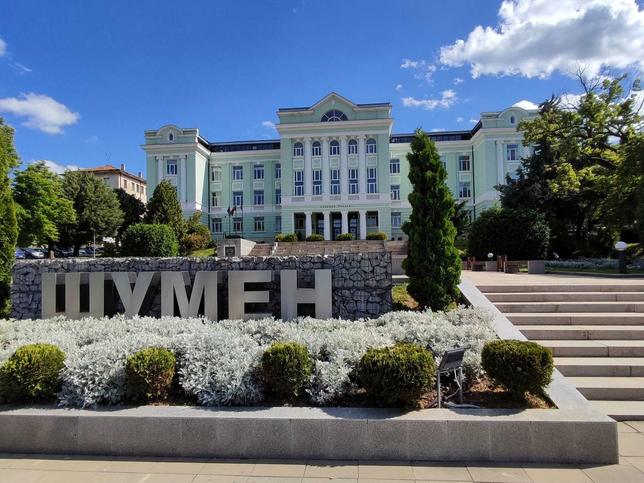
Мы рады сообщить об открытии новой региональной структуры в городе Шумен, благодаря которой мы продолжаем следовать нашей миссии - быть ближе к людям в каждом регионе Болгарии, предоставляя профессиональный сервис, безопасность и полное сопровождение в сделках с недвижимостью.
Нашим новым региональным представителем в Шумене и близлежащих городах стала Галина Кирилова ...